
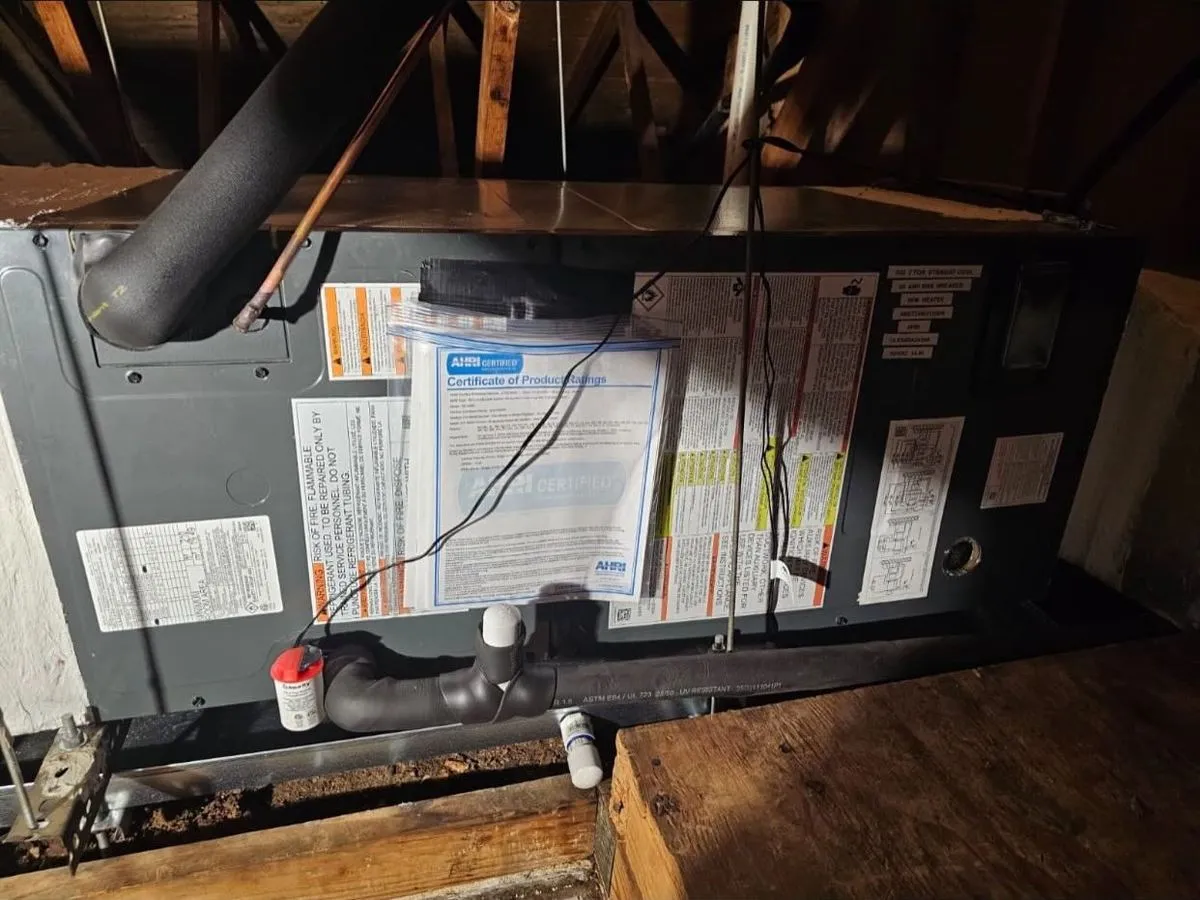
Ask any Tampa AC tech what their #1 service call is in the summer and you'll get the same answer: the drain line. Not compressors, not motors — a three-quarter-inch PVC pipe full of algae slime. Your AC pulls gallons of water out of Tampa's humid air every day, all of it drains through that one small line, and when it plugs up, the system either shuts itself off or starts pouring water where water should never be.
The good news: this is the most DIY-friendly breakdown there is, and the most preventable. Here's how to spot it, clear it, and keep it clear.
The signs your drain line is clogged
Seen any of these?
- The AC shut off by itself on a muggy day and won't restart — the #1 sign. A safety float switch kills the system when water backs up, specifically to stop a flood.
- Water around the air handler — a puddle in the closet, garage, or pan underneath the unit.
- A water stain spreading on the ceiling below an attic handler. This one is urgent — the overflow is already happening.
- A musty, swampy smell when the system starts — standing water and algae in the pan and line.
- Gurgling sounds from the handler or a drain that drips outside in gulps instead of a steady trickle.
Clear it yourself in about 15 minutes
1. Turn the system off at the thermostat so it stops making water while you work. 2. Find the outside drain exit — a PVC pipe, usually near the outdoor unit, that drips when the AC runs. 3. Suck it out: seal a wet/dry vacuum hose over that pipe end and run it for 2–3 minutes. You'll usually hear the clog let go and pull a slug of slimy water out. 4. Flush from inside: find the cleanout tee on the drain line by the air handler (a vertical pipe with a cap), pour in a cup of warm water or distilled vinegar, and cap it. 5. Restart the system and check the outside pipe — you want a steady drip. If the float switch was tripped, the system should start right up.
If the vac doesn't pull it clear, or the clog comes back within a few weeks, that's not a you problem — the line likely has growth all through it or a sag holding water, and it needs a full cleaning.
What we do on a drain call
We clear the line from both ends, vacuum out the pan, clean the trap, test the float switch to prove it actually protects you, add an algae treatment so it stays clear longer, and check the line's slope — a drain that holds water clogs no matter how often you clear it. Then we'll show you the cleanout and the vinegar routine so you're not paying us for a 15-minute job next summer.
Why the tune-up exists, to me it seems like…
…this clog is the whole argument. A drain flush takes minutes on a planned visit. The same clog on a Saturday in August is an emergency call, a soaked ceiling, or both. Every tune-up and plan visit we do includes the drain line — that's not an upsell, it's the cheapest insurance on the truck. — wil, owner
Questions Tampa homeowners ask us
Why does my AC turn off when the drain line clogs?
Because it's designed to. Most systems have a float switch in the drain pan or line: when water backs up, the switch floats up and cuts the system off before the water overflows into your ceiling or walls. An AC that shut itself off on a humid day with water standing in the pan is usually protecting your house — the clog is the problem, not the switch.
How much water does an AC pull out of Tampa air?
On a humid summer day, a typical Tampa home system can pull 5 to 20 gallons of water out of the air — every day. All of it leaves through one small PVC drain line. That's why Tampa clogs are so common: the line runs wet for months straight, and algae and slime grow in it the whole time.
Can a clogged drain line damage my house?
Yes — that's the real risk, worse than the warm house. When the line blocks, water overflows the pan. On a closet or garage handler you get a puddle. On an attic handler you get ceiling stains, soaked drywall, and mold. If you see a ceiling stain under your AC, treat it as urgent even if the system still runs.
How often should the drain line be flushed?
In Tampa, monthly during cooling season is ideal — a cup of distilled vinegar poured into the indoor cleanout tee keeps algae down. At minimum, get it flushed at every tune-up. Our $75 fall tune-up and every maintenance plan visit include a drain line flush for exactly this reason.
Why does my drain line keep clogging back up?
Because clearing the clog doesn't remove the biofilm growing on the pipe walls — it grows back in weeks. Recurring clogs usually mean the line needs a full cleaning and treatment, the line has a sag or belly holding water, or there's no proper trap. Fix the cause and the clog stops being a monthly event.
Heat pump acting up? AC shut off on you?
Same-day service across Tampa — and same-day estimates are free. Call (813) 770-2722 or request service online.
Keep reading: AC Not Cooling? 7 Checks Before You Call · What Does an AC Tune-Up Include?