
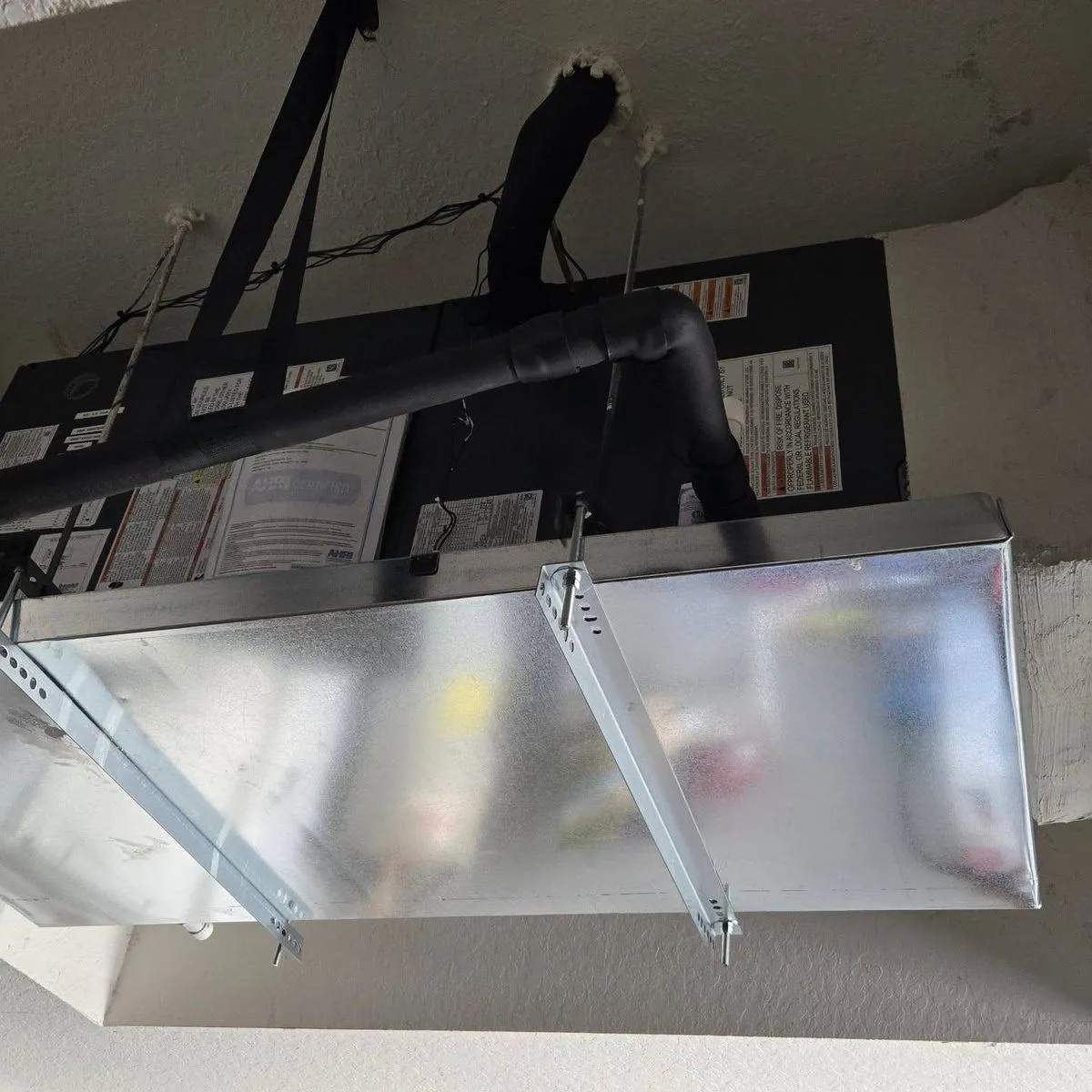
You open the air handler closet and the coil looks like the inside of a freezer. Or there's frost creeping down the copper lines outside. Either way, your AC has frozen up — and here's the part most people get wrong: the ice is never the disease. It's the symptom. Something upstream is wrong, and until it's fixed, the ice will keep coming back. The good news: two of the causes are cheap. The bad news: one of them is a refrigerant leak, and running the system frozen can kill the compressor — the most expensive part in the whole unit.
The real causes
“When I see a frozen coil, I don’t reach for the ice scraper — there isn’t one on my truck. Ice means something upstream is starving that system: air or refrigerant. Find which one, fix that, and the ice never comes back.”
What to do right now
Turn the cooling off at the thermostat, but set the fan to ON — that blows room air over the coil and thaws it safely, usually in 2–4 hours. Put a towel down: a frozen coil melts a surprising amount of water, and check that the drain is handling it. While it thaws, swap the filter if it's dirty. Then run the cooling again and watch it: if ice comes back within a day, it's not the filter — it's airflow or refrigerant, and it's time to call.
What to never do
Don't keep running it "to see if it gets better" — a frozen system can slug the compressor with liquid refrigerant and turn a repair into a replacement. Don't chip or scrape the ice; coils puncture easily and that's a much bigger bill. And don't let anyone just "top off the refrigerant" without leak-checking it — you'd be paying to refill a bucket with a hole in it.
Why it matters in Tampa
Our humidity is the accelerant. The coil pulls gallons of moisture out of Tampa air every day — which is why a coil that's even slightly too cold builds ice here faster than it would up north. It's also why freeze-ups spike in the shoulder seasons: cool nights, low thermostat settings, and systems that limped through summer with a marginal charge finally tip over.
Questions & Answers
Why does low refrigerant make an AC freeze up?
Refrigerant absorbs heat from your home's air. When the charge runs low — almost always from a leak — pressure drops, the coil gets too cold, and moisture from the air freezes onto it. Ice is the symptom; the leak is the problem.
Is it safe to run my AC while it's frozen?
No. Running a frozen system starves the coil of airflow and can send liquid refrigerant back into the compressor, which can destroy it. Turn cooling off, leave the fan on to thaw, and call.
How long does an AC take to thaw out?
With cooling off and the fan running, most systems thaw in 2 to 4 hours; a heavily iced coil can take up to a full day. Never chip the ice off — that can puncture the coil. And a tech can't diagnose the cause until the ice is gone.
Can a dirty filter really freeze my AC?
Yes — it's one of the most common causes we see. A clogged filter chokes airflow across the coil; without warm air moving over it, the coil temperature drops below freezing and ice builds fast.
Why does my AC freeze up at night?
Cooler night air plus a thermostat set very low makes the coil run colder, and long overnight runtimes give ice time to build. If it only freezes at night, low refrigerant or marginal airflow is the usual culprit.
Frozen again?
If it refreezes after a thaw and a fresh filter, the cause is real — and we'll find it. 24/7 service across Tampa Bay.
Call (813) 770-2722 AC Repair