Walk-in cooler and freezer repair in Tampa, FL.
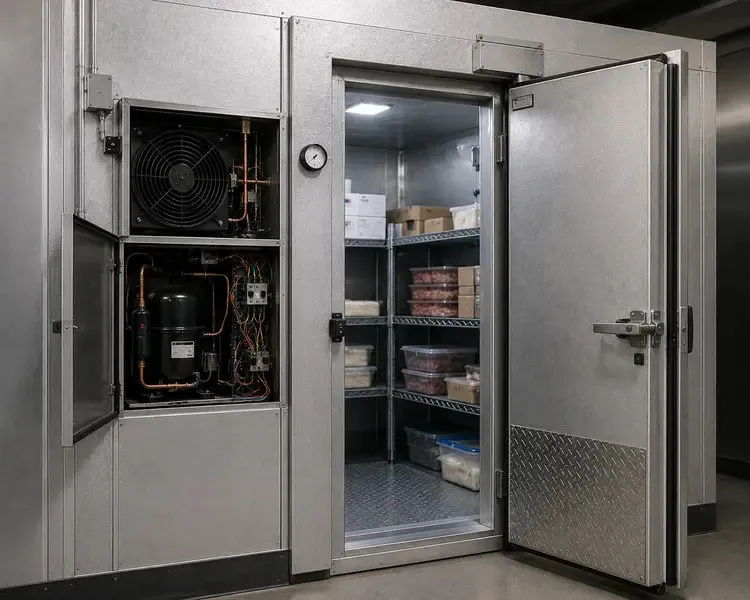
Warm cooler, inventory at risk — that's the call we drop everything for. When a walk-in starts climbing, every hour is product loss, and for a restaurant that's the week's food cost melting in real time. Mendoza Heating and Air handles commercial refrigeration across Tampa: walk-in coolers and freezers, reach-ins, and the refrigeration side of restaurant operations.
Refrigeration is unforgiving equipment — it runs 24/7/365, and small problems become big ones fast. A door gasket that doesn't seal, a condenser coil caked in kitchen grease, a thermostat drifting a few degrees: each one is a slow bleed of efficiency until the day it becomes a crisis. We fix the crisis, then we fix the cause.
If you run a kitchen, the smartest money you spend is a maintenance agreement covering both refrigeration and HVAC — one vendor, one schedule, no 2am surprises. Call (813) 770-2722 and ask.
Refrigeration emergencies get our fastest response — faster than standard HVAC, because product loss has a clock on it. When you call, tell us what's at risk (walk-in cooler at 50 degrees, freezer thawing, health inspector due tomorrow) and we triage by what's actually on the line.
While you're waiting: keep the doors closed — every opening dumps cold air you're not getting back. If you have thermometers in the box, note the readings; it helps us diagnose faster when we arrive. And don't keep "checking" by opening the door — we know it's hard, but it matters.
Most refrigeration failures are electrical or airflow — fan motors, contactors, clogged condensers, thermostats — and we carry those parts. Compressor failures happen, and when they do we'll tell you straight whether it's a same-day compressor swap or a tomorrow-morning parts run, with the honest timeline either way.
“Warm cooler, inventory at risk — that’s the call I drop everything for. Restaurants can’t wait till morning.”
Walk-ins and reach-ins fail in predictable ways. Here's what we find.
The universal complaint, with about five common causes: dirty condenser coil (the #1 — kitchen grease and dust insulate it until it can't reject heat), failed evaporator fan, low refrigerant, bad door gasket, or a thermostat drifting out of calibration. We check them in order of likelihood, not in order of expensiveness — most of the time it's the coil or a fan, not the compressor.
Some frost is normal; a glacier isn't. Heavy ice means warm moist air is getting in — bad door gasket, door left ajar, or a failed defrost cycle (timer, heater, or termination switch). Ice insulates the coil, which makes the system run longer, which makes more ice. Break the cycle early and it's a small fix; let it go and you're chipping ice off product.
A compressor that never cycles off is screaming for help — it's trying to reach a temperature it can't hit. Causes range from the simple (dirty coil, bad gasket) to the serious (refrigerant leak, failing compressor valves). Running it like this burns it out, so this is a "call today, not next week" situation.
Clogged drain line or a drain pan issue — the refrigeration version of the AC condensate problem. In a kitchen it's also a slip hazard and a health-code flag. Usually a fast fix: clear the drain, check the pan, verify the float switch if equipped.
Fan motor bearings, mostly — a $200-ish part that announces itself for weeks before it dies. If your condensing unit has been getting louder, that's the warning. Ignore it and the fan stops, the head pressure spikes, and now you're buying a compressor too.
The most expensive refrigeration habit in any kitchen: the walk-in door that doesn't close properly or gets propped open during prep. Every minute open dumps the cold air out and pulls hot humid kitchen air in — the system runs overtime, ice builds on the coil, and temps drift toward the danger zone. Self-closing hinges, intact gaskets, and strip curtains are cheap fixes with outsized impact. During a PM we check all three, because the best compressor in the world can't overcome a door that won't shut.
If your box can't hold 41°F (cooler) or 0°F (freezer) consistently, that's a health-code problem, not just a food-cost problem. We prioritize these calls — tell us the inspection date and we'll get the box dialed in and documented before it.
The honest pricing part: we diagnose before quoting, and we won't sell you a compressor when a fan motor's the problem. But we'll also tell you straight when a box is done — a 20-year-old walk-in with a dead compressor and rotted panels isn't worth resurrecting, and we'd rather lose the repair than sell you one.
Refrigeration emergencies get our fastest response — call (813) 770-2722, tell us the box temp and what's at risk, and we triage by the product-loss clock. While waiting: keep the doors closed, note thermometer readings, and resist 'checking' — every opening dumps cold air.
41°F or below for coolers, 0°F for freezers — that's health code, not just our recommendation. If your logs show drift above those numbers, the box needs service before the inspector notices.
Yes — True, Beverage-Air, Turbo Air, Kolpak, Arctic, and the rest. The components are largely universal: compressors, fan motors, controls, and coils work the same across brands.
It's urgent, not quite an emergency — but don't wait. Heavy ice means warm air infiltration or defrost failure, and it snowballs: ice insulates the coil, the system runs longer, more ice forms. Early it's a gasket or defrost part; late it's a much bigger job.
Yes — that's the smart play. One maintenance agreement covering both, one vendor, one schedule. When the dining room AC and the walk-in are both our responsibility, nothing falls through the cracks between two companies.
Quarterly for kitchens — grease, heat, and 24/7 runtime are brutal on condensers. A quarterly PM (coil cleaning, fan checks, gasket inspection, temp verification) costs a fraction of one product-loss event.
Depends on the box's age and condition. Compressor on a solid 8-year-old box? Replace the compressor. Dead compressor on a 20-year-old box with rotted panels and bad gaskets? We'll show you why replacement wins — we'd rather lose the repair than sell you one you'll regret.
Same-day service across Tampa, Pasco County, Pinellas County, and Greater Northdale. Rated 5.0 by your Tampa Bay neighbors on Google.
Call (813) 770-2722 Read Our Google Reviews