
Ask a Tampa homeowner what their AC does and they'll say "it cools the house." True — but only half true. In Tampa Bay, the bigger half of your system's job is pulling water out of the air. Summer dew points here sit in the mid-70s for months, and every bit of that moisture is a load your system has to carry before the temperature even starts to drop. Size an AC like you're in Phoenix and you'll get a house that's 74 degrees and feels like a cave.
This is why AC sizing in Florida is its own discipline — and why the sizing conversation matters just as much as the brand on the box when you're looking at a new system installation.
Two loads, not one
“Everybody asks me what tonnage their house needs like there's a chart on my truck. There isn't — there's a calculation. I'd rather put in the smaller system that runs all afternoon and dries your house out than the bigger one that cools it in ten minutes and leaves it sticky.”
What right-sizing actually looks like
A proper sizing starts with a Manual J load calculation: square footage, yes, but also window area and direction, insulation, ceiling height, duct condition, and how many people (and showers) the house holds. In Tampa Bay it also has to weight the latent load honestly — that's the step the "tons per square foot" rule of thumb skips entirely, and it's why two 2,000-square-foot homes a mile apart can legitimately need different systems.
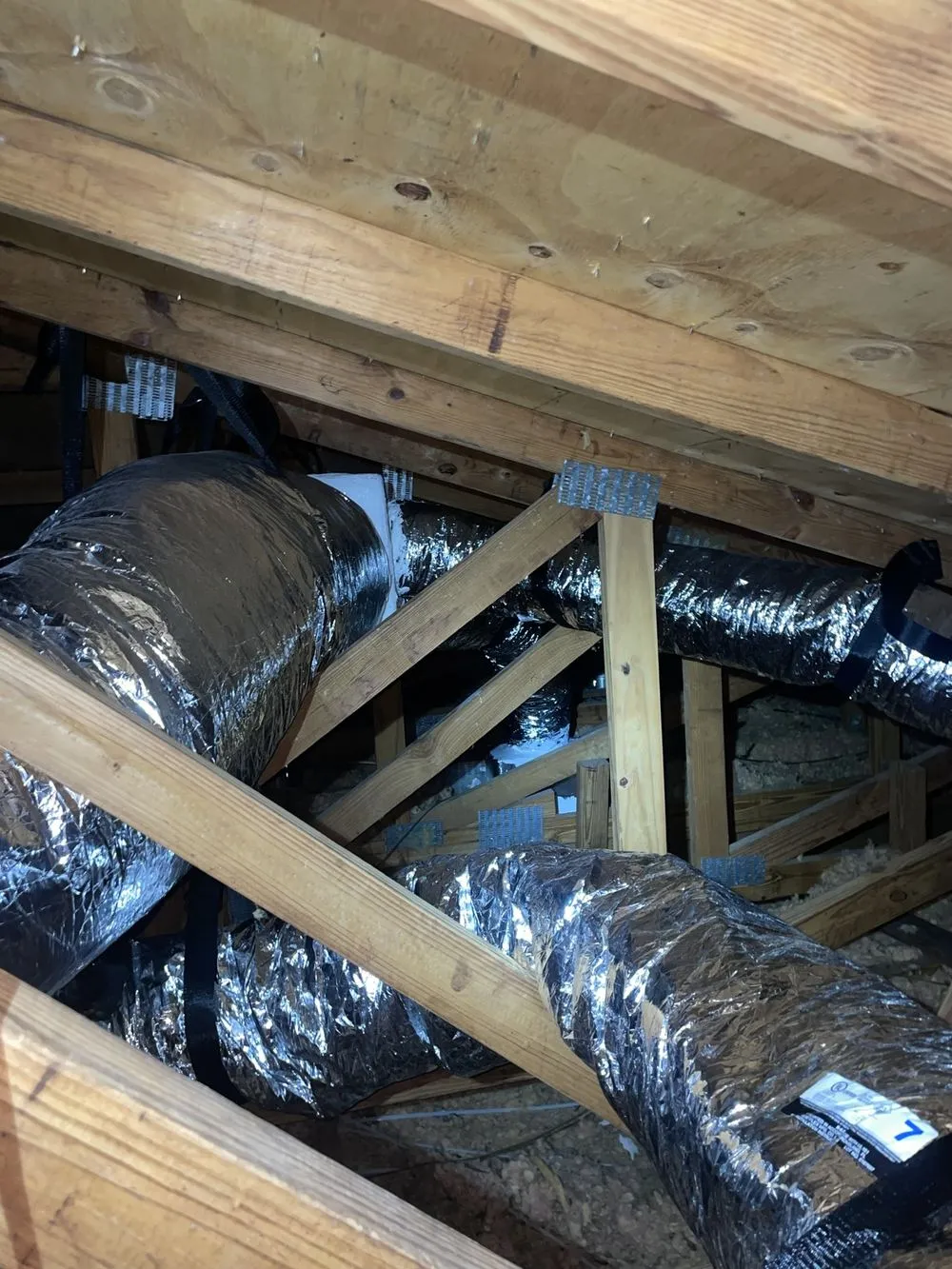
It's also why ductwork gets inspected before we quote. A right-sized system on undersized or leaking ducts performs like a wrong-sized one. When we measure a home for a replacement system, the ducts are part of the measurement — not an afterthought.
Signs your current system is oversized
Short run times on hot days. A house that's cool but clammy. Humidity readings indoors sitting above 55–60%. A musty smell when the system kicks on. Rooms that swing cold-hot-cold. If that list sounds familiar, the system may not be broken at all — it may just be too big, and no repair changes that math.
The variable-speed difference
Modern variable-speed and two-stage systems run long, low, quiet cycles — exactly what Florida humidity wants. They sip power at partial load and dehumidify far better than a single-stage unit of the same tonnage. For a lot of Tampa Bay homes they're the honest answer to the sizing problem: sized right on paper, forgiving in practice. We walk through the options when we quote a new installation — with the load calculation in hand, not a guess.
Questions & Answers
Does a bigger AC dehumidify better?
No — it dehumidifies worse. Dehumidification happens while the system runs, and an oversized system reaches the set temperature so fast that it shuts off before it has pulled much moisture out. The house ends up cool and clammy instead of comfortable.
What size AC does a 2,000-square-foot Tampa home need?
There is no honest square-foot answer — a Manual J calculation weighs windows, insulation, ducts, and occupancy, and in Tampa it has to account for our humidity load. Many 2,000-square-foot homes land in the 3-to-4-ton range, but the calculation decides, and getting it wrong in either direction costs you comfort. We measure free — call (813) 770-2722.
Can a variable-speed AC fix my humidity problem?
It helps a lot. Variable-speed systems run long, low cycles that keep air moving over the coil, which pulls far more moisture than short full-blast runs. Combined with right sizing, it is the most effective comfort upgrade we install in Tampa Bay homes.
What indoor humidity should a Tampa home hold?
Between 45% and 55% feels comfortable and keeps mold risk down. If your home sits above 60% while the AC runs normally, that is a sizing, duct, or equipment problem worth diagnosing — not something a thermostat setting fixes.
Sizing it right?
If your home is cool but clammy, or you are planning a replacement and want the load calculated instead of guessed — we measure free, all over Tampa Bay.
Call (813) 770-2722 AC Replacement