
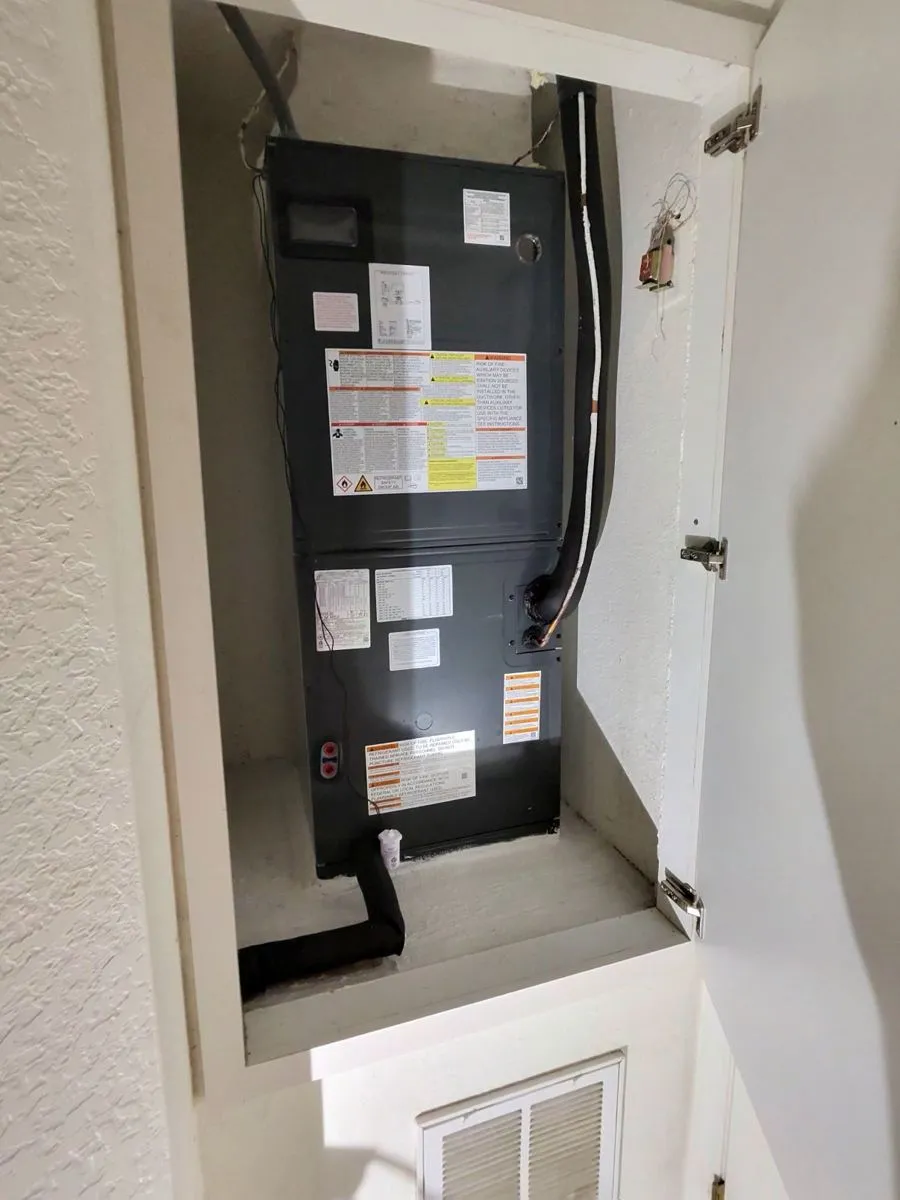
A 7-degree gap between what you set and what you get means the system has lost capacity or the house is gaining heat faster than the system can remove it. On a brutal Tampa afternoon a healthy system might sit 2–3 degrees above setpoint — that’s normal on a 95-degree day. Seven degrees on an ordinary day is not. And here’s the twist most people miss: it’s rarely the thermostat. The thermostat is just the messenger reporting the temperature. The usual culprits are airflow, refrigerant, ductwork, or a system that was never sized right for the house.
The real causes
“Don’t buy a new thermostat first. Nine times out of ten the thermostat is the messenger, not the problem — find out why the system can’t keep up, and the number on the wall takes care of itself.”
What to do right now
Four free checks, in order. One: pull the filter — if it’s gray, replace it. Two: walk the house and open every vent; check that returns aren’t blocked by furniture. Three: feel the air at a vent — weak airflow points to a filter, duct, or blower problem; air that’s barely cool points to refrigerant or coil trouble. Four: look at the thermostat’s location — sun, lamps, and drafts all lie to it. Note when the gap started: sudden means a failure, gradual means capacity or ducts.
What to never do
Don’t set the thermostat to 60 to “catch up faster.” An AC cools at one speed — a lower setting just makes it run longer, and on a struggling system it can freeze the coil solid, which makes cooling worse. Don’t close vents in unused rooms either: that raises pressure, chokes airflow, and can freeze the coil or crack ducts. And don’t let anyone top off refrigerant without finding the leak — you’ll be paying for the same recharge again next season.
Why it matters in Tampa
Tampa systems are sized for our design temperature — roughly the low-to-mid 90s — not for freak 100-degree stretches, and humidity adds a second load on top of temperature. A system that holds 72 on a normal July day but slips to 76 during a heat wave is doing its job; a system that can’t break 79 on an ordinary 90-degree day has a problem worth diagnosing. That’s also why right-sizing matters here more than brand: an oversized unit short-cycles and leaves the house clammy, an undersized one never catches up.
Questions & Answers
Why won’t my house cool below 79 when it’s set to 72?
The system has lost capacity or the house is gaining heat faster than it can remove it. The usual causes are restricted airflow, low refrigerant from a leak, leaky attic ducts, or an undersized or aging system. A technician checks them in that order.
Is my thermostat broken?
Usually not. If the air from the vents is weak or barely cool, the problem is the system, not the thermostat. A thermostat is only suspect if it sits in direct sun, near a heat source or draft, or the problem started right after it was replaced.
Should I set the thermostat lower to cool the house faster?
No. An AC cools at one speed regardless of the setting — setting it to 60 just makes it run longer and can freeze the coil, which makes cooling worse. Set the temperature you actually want.
Is it normal for the house to run above setpoint on the hottest days?
A few degrees on a 95-degree-plus afternoon is normal — systems are sized for typical peak heat, not extremes. A 7-degree gap on an ordinary day is a real problem worth diagnosing.
When is it time to replace instead of repair?
Age times repair cost is the honest test: if the system is old and the repair is big, replacement usually wins. Our $5,000 rule post walks through the math — and we’ll give you a straight answer either way at (813) 770-2722.
Still still stuck at 79?
If the free checks didn’t close the gap, the cause needs gauges and a meter — and we’ll find it. 24/7 service across Tampa Bay.
Call (813) 770-2722 AC Repair